
Cathedral Craft
How Stone Masons Built Medieval Cathedrals
Medieval cathedrals were extraordinary hand-built achievements: vast works of faith, geometry, and endurance raised without modern machinery. Their construction depended on disciplined craft traditions, practical ingenuity, and generations of labor committed to shaping stone for centuries to come.
An Organized Hierarchy of the Craft
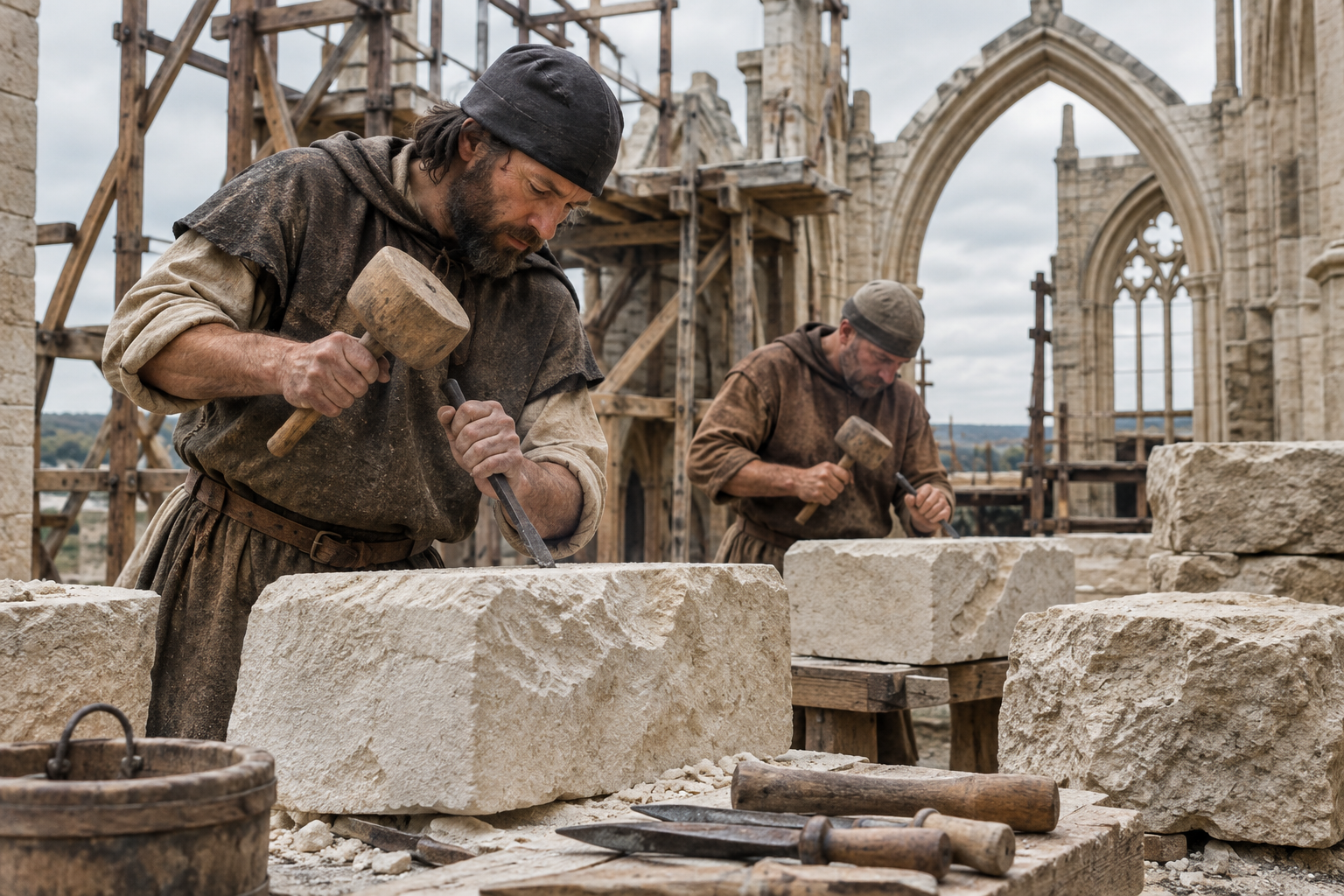
Cathedral building was not improvised labor. It was an ordered profession led by the master mason, who directed design, measurement, and structural judgment on site. Beneath him worked freemasons, skilled in fine cutting and fitting; roughmasons, who handled heavier and less-finished work; apprentices learning the trade through daily practice; and laborers, whose hauling, lifting, and support tasks kept the works in motion.
Master Mason
Directed design, layout, and structural decisions.
Freemasons
Shaped and set finely cut architectural stone.
Roughmasons
Prepared heavier blocks and foundational stonework.
Apprentices & Laborers
Learned, carried, lifted, and sustained daily progress.
From Tracing Floor to Rising Stone
-
1) Geometry and templates
The work began on the tracing floor, where full-scale lines translated vision into precise geometry. From these drawings, craftsmen made wooden templates to repeat exact profiles for arches, ribs, columns, and moldings.
-
2) Quarrying and identification
Stone was quarried, transported, and shaped into usable blocks. Masons marked finished pieces with mason's marks, creating practical accountability and helping track placement and workmanship.
-
3) Hoisting and assembly
As walls climbed and vaults rose, treadwheel cranes provided lifting power, raising heavy stones to scaffold height where teams set each piece in sequence with careful alignment.
Seasonal Labor, Enduring Legacy
Cathedral work moved with the seasons: quarrying, transport, and high masonry were timed to weather, daylight, and available hands. Progress could be swift in one year and measured in the next, yet the discipline of the lodge sustained continuity across decades.
The result was a legacy set in stone. These buildings stand not only as monuments of devotion, but also as lasting testimony to organized craft, shared standards, and the patient skill of masons whose work outlived their own generations.